
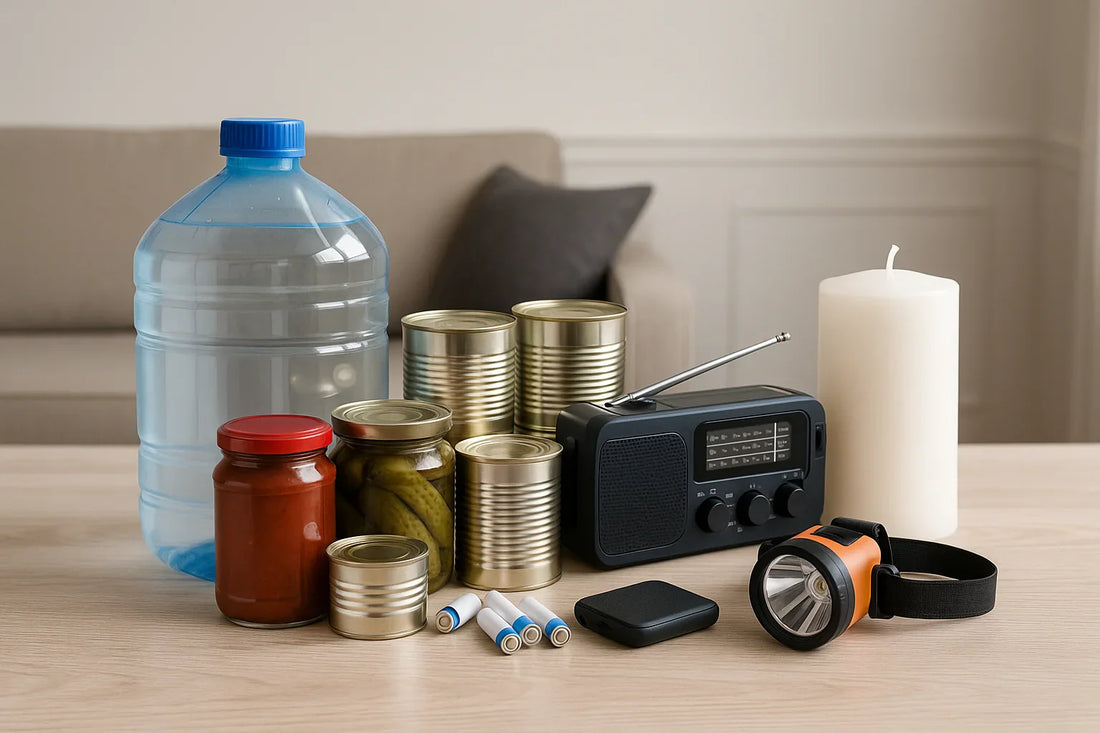
What is a home emergency kit and why is it important for a household?
Niko KoskelaHousehold preparedness is everyday security: a household's own stock of essential supplies that allows it to survive for at least 72 hours without external help. It is not panic-driven hoarding or specialized readiness, but planned, intelligent, and responsible everyday preparedness. This basic equipment ensures that you have water, food, warmth, communication capabilities, and supplies needed for emergency care, even if electricity, water, or commercial supply chains are disrupted.
Table of Contents:
- What is household preparedness and why is it important for a household
- Why preparedness is a sensible part of everyday responsibility
- What is included in the emergency stock recommended by authorities
- How to build basic equipment in practice
- Why start now
- Frequently asked questions about preparedness
- Maintenance and recycling
- Checklist
- Scenario examples
- Special situations and customization
- Budget-friendly construction
- Community preparedness
- Official guidelines and communication
- Summary
Why is preparedness a sensible part of everyday responsibility?
Building preparedness is a small investment, but it provides great security. Short power, water, or logistics disruptions are real everyday challenges, especially in autumn and winter. In a situation where normal service infrastructure temporarily fails, pre-assembled emergency supplies allow daily life to continue without panic and additional stress.
Authorities such as the rescue department, the Ministry of Interior, and THL recommend basic preparedness for at least 72 hours for every household. This means that the family has enough basic resources set aside to cope and knows how to act before external help arrives.
What is included in the emergency stock recommended by authorities?
The equipment should be built in parts to cover the following areas:
1. Food and drink
At least 2 liters of drinking water per person per day. For a three-day period, a family of four needs at least 24 liters of water, in addition to which it is advisable to reserve utility water for washing and cleaning. Food choices are based on long-lasting, ready-to-eat products that do not require refrigeration: canned goods, energy bars, dried products, and emergency meals. By rotating part of the stock in everyday life and replenishing expiring products in time, you ensure that the contents remain usable (FIFO principle).
2. Light and warmth
Headlamps and flashlights, as well as their spare batteries, are essential in the dark. Candles and lighters should be stored on safe surfaces. Emergency blankets, extra clothes, thick socks, and disposable heat pads provide warmth if the indoor temperature is insufficient.
3. Communication and power
An emergency radio provides official announcements in an emergency. Power banks and other charging solutions keep phones and important devices usable. A stock of batteries provides energy for smaller devices such as lamps and clocks.
4. First aid and hygiene
A basic first aid kit along with personal prescription medications is important. Hygiene is maintained with hand sanitizer, wet wipes, toilet paper, and garbage bags. Water supplies include at least two covered buckets, which can be used for carrying water and as a temporary toilet.
5. Safety and information
Important document copies (identification, insurance, contact information) should be stored securely both on paper and digitally. An emergency plan defines how family members communicate and meet if society is partially disconnected.
6. Tools and supplies
A multi-tool, tape, rope, protective plastic sheets for covering windows, and other appropriate aids should be chosen based on the risks of one's own environment.
7. Peace of mind and guidance
A written user manual, an emergency checklist, and an internal family communication plan help operate with less stress. Simulation and exercises keep information fresh.
How should basic equipment be built in practice?
To begin, prioritize water, food, and communication. Assemble the preparedness kit in smaller batches: one area per week, so the whole accumulates controllably within the budget. Rotate products in everyday life and replenish expiring ones. Store the entire kit in a dry, cool, and easily accessible place that all family members know about.
It's worth starting now, before the headlines awaken
Often, interest in preparedness arises only when something has already happened: a power outage, empty stores, or news of crises. At such times, products may be out of stock and deliveries delayed. Calm anticipation provides a head start: essential supplies are ready without price increases or availability issues.
Frequently asked questions about preparedness
How much water should be reserved?
The recommendation is at least two liters of drinking water per person per day. For a three-day period, a family of four needs at least 24 liters of drinking water. Additionally, it is advisable to reserve utility water for washing or cleaning and to estimate the need accordingly.
Can stored food be used normally?
Yes. It is advisable to integrate the emergency stock into everyday life by using the oldest products first and replenishing with new ones. This avoids waste and ensures freshness.
Is preparedness mandatory?
It is not legally mandatory, but authorities strongly recommend it. It facilitates individual and family functioning in disruptive situations and reduces unnecessary burden on society.
What to do if equipment is expired?
Use expiring food items in everyday life and replace them with fresher ones. Check batteries and medicines at least twice a year.
How should equipment be stored correctly?
Keep it in a dry, cool, and dark place. Avoid moisture and direct sunlight. Using labels and transparent storage boxes helps to visualize the space.
Can a preparedness kit be shared with neighbors?
Yes. A local network that shares information, communication methods, and possibly supplies increases collective resilience.
How do I combine information digitally?
Save important documents securely to the cloud and also keep offline copies on an encrypted USB stick or as paper versions.
Maintenance and recycling – the life cycle of equipment
Preparedness is dynamic and requires maintenance. According to the FIFO principle, the oldest products are used first. Conduct a review at least twice a year: replace expiring products, check batteries and prescription medications. Add seasonal additions as needed, such as items related to warmth and snow removal in winter, and water usage checks and emergency cooling tips in summer.
Family roles and training
Designate responsible persons: who checks the equipment, who takes care of medicines, who manages water rotation. Practice "what if" scenarios: meeting points, communication channels, and device usage. Print a user manual and display it prominently.
Concrete checklist (72-hour basic package, family of four)
- Water: 24 liters of drinking water + 10–20 liters of utility water (label containers and update)
- Food: canned goods, energy bars, ready meals, and dried products that are easy to prepare without electricity
- Light: headlamps, flashlights, spare batteries, and candles in different locations
- Warmth: emergency blankets, extra clothes, heat pads
- Communication: emergency radio, power banks, phone chargers (keep charged)
- First aid: first aid kit, prescription medications (update regularly)
- Hygiene: hand sanitizer, toilet paper, garbage bags
- Safety: important documents, emergency plan (both digitally and on paper)
Scenario examples
Scenario 1: Power outage in a small community in winter
An unexpected power outage interrupted store operations. A family with basic equipment: emergency blankets, rechargeable lamps, power banks, and warm clothes, was able to function independently. Information was obtained via emergency radio, and the oldest food items had been rotated in time.
Scenario 2: Water outage in a rural area in spring
The village was without water for 48 hours. The family's emergency stock included buckets, purification tablets, and storage containers. They were able to use water for both drinking and hygiene without panic and managed utility water wisely.
Scenario 3: Sudden medicine shortage
A family member needed prescription medication that could not be obtained immediately from the pharmacy due to overcrowding. The reserve medicine pack and written instructions helped keep the situation under control.
Special situations and customization
Special needs can be taken into account: according to allergies, chronic diseases, or family structure. For cottage dwellers, a light version should be built; for senior families, ease of use should be emphasized; for single occupants, a personalized preparedness kit. Emergency supplies can be expanded to meet the needs of mobility, children, or pets.
Budget-friendly construction
Building in stages with small acquisitions makes it an achievable and manageable process. This approach allows you to first focus on the most important things that are essential in your daily life. Start by acquiring basic necessities such as water, food, and communication. These are vital elements that ensure you can live comfortably and safely.
Once you have these basic needs covered, you can gradually add other components that improve quality of life or make everyday life smoother. This might include, for example, acquiring household appliances, upgrading furniture, or other comforts that make your home more functional and pleasant.
Take advantage of discounts and offers, as they can significantly reduce costs. Make a list of needed products and compare different options. Often, domestic basic solutions can work just as well as more expensive, imported products. This not only saves money but also supports the local economy and reduces environmental burden.
Furthermore, it is important to recycle used items in everyday life. This can mean, for example, renovating old furniture or acquiring used household appliances. Recycling not only saves money but also reduces waste and promotes sustainable development. Avoid unnecessary double purchases, as it is neither economically sensible nor environmentally sustainable. Plan your acquisitions carefully and aim to utilize existing resources as efficiently as possible. This way, you can build a home that is both functional and economically sustainable.
Community preparedness
Neighborhood cooperation can significantly increase the area's resilience, i.e., its ability to cope with and recover from various challenges and crises. Through cooperation, residents can build stronger ties with each other and develop common practices that improve the safety and well-being of the entire community.
Firstly, sharing checklists is an excellent way to ensure that all residents in the neighborhood are aware of important matters, such as emergencies, safety instructions, and other practical issues. These lists can also help ensure that everyone has the necessary information and tools, which can be crucial in crisis situations.
Keeping contact information up to date is another important step. When neighborhood residents know each other and know how to contact them, it can facilitate getting help in emergencies. For example, if someone needs help or support, it is easier to turn to a familiar neighbor.
Reserving common equipment, such as first aid kits, tools, or other necessary supplies, can also be beneficial. When resources are shared, not everyone has to acquire everything themselves, and community members can support each other when needed.
A small community can also provide peer support, which is especially important in difficult times. When people share their experiences and feelings, it can help them feel less lonely and isolated. Joint checks, where residents visit each other's homes or areas to ensure everyone is well, can also increase community cohesion.
Finally, sharing extra resources can be vital, especially in crisis situations. If, for example, a neighborhood member is experiencing financial difficulties or needs help with daily tasks, community support can be crucial. Cooperation and solidarity can help everyone cope better and create a safer and more sustainable environment.
Official guidelines and communication
Follow the official guidelines found in suomi.fi's preparedness guides. These guides provide comprehensive information on how to prepare for various emergencies, such as natural disasters, accidents, or other crisis situations. It is important to familiarize yourself with the bulletins from your local rescue department, as they contain current and regional information that can be crucial in an emergency.
In addition, the health-related recommendations from the National Institute for Health and Welfare (THL) are essential, especially during pandemics or other health threats. THL's instructions help you understand how to protect yourself and your family and what measures should be followed.
We recommend that you save the most important instructions in PDF format to create an emergency folder. This emergency folder can include, for example, evacuation plans, important contact information, medication instructions, and other critical information that is easily accessible when most needed.
Also, keep emergency numbers, such as those for rescue services, police, and emergency medical services, as well as family members' contact information easily accessible. You can write down this information and keep it in a visible place, such as on the refrigerator door or in your phone, so that it is quickly available in an emergency.
Remember that anticipation and preparation are key to protecting yourself and your loved ones from potential dangers.
Ready-made kits – choose an immediately usable whole
If assembling your own emergency kit feels like too big a task, a pre-assembled solution will take half the work off your hands. One of the most central and recommended products is the 72h Kit: an official recommendation-compliant, ready-made preparedness kit for two people for three days. It covers food, water, and essential supplies for power and water outages and other disruptive situations.
72h Kit (household preparedness kit for two)
The 72h Kit is designed so that two people can survive for at least 72 hours without external help. The kit contains basic supplies in accordance with official recommendations: light sources, first aid equipment, long-lasting food (a total of approximately 10,057 kcal for two people for three days), water, hygiene products, and communication and preparation tools. The shelf life is long (over 22 months for food), and the kit is easy to deploy and maintain.
The product is sold in different versions: for example, with and without water.
Why choose the 72h Kit?
1. It is assembled according to official recommendations and covers the basics in one package.
2. All essentials are found in one complete package: water, food, first aid, light, communication, and hygiene.
3. Long shelf life and clear purpose facilitate maintenance and periodic checks.
Summary and next steps
Preparedness is not complicated, but its impact on the smoothness of everyday life is significant. A minimum 72-hour buffer stock provides peace of mind and reduces panic, keeping the family cared for even if normal daily life is disrupted. By building the whole in stages, maintaining it regularly, and utilizing community spirit and official guidelines, preparedness becomes a permanent and effective part of everyday life.